Do you enjoy working on home projects? Ever find that your blades can be a little dull or not perform as well as they used to? This handy video shows us how to clean blades and bits to restore them to their former glory. Just because they are not as sharp as they were when they were first purchased doesn't mean your tool isn't working anymore, it just needs a little tune up!
For more tips and tricks for all your home needs visit: NewEarthVA.com
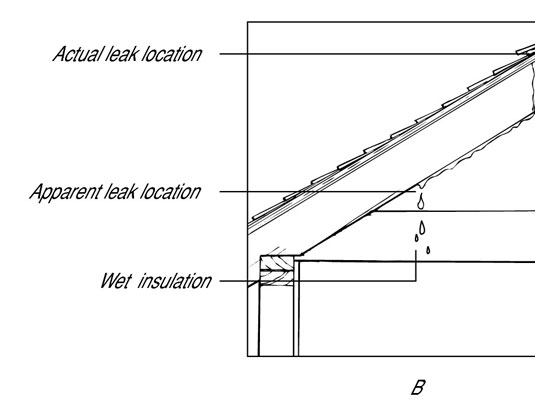
It's been raining a few days now in Richmond, VA and this couldn't really be a better time to check for leaks to see if there your house needs repairs before it's too late! Leaks can be quickly and easily repaired if you catch them when they are still small, this also prevents greater and irreperable damage to your home.
Make sure to check the attic for leaks if you have one, the tutorial also talks about what to do when it is not actually raining. Bring a hose to your rooftop to check for leaks, pretty clever! You'll probably need someone inside the house if you do decide to run a hose so they can help you spot the place where the roof is leaking, when it is raining you won't have this issue.
Moisture or wet spots are all things that you should be checking for on a regular basis on your ceiling, because sometimes a leak can be so small that it needs some time to show.
Unless you know what you're doing we don't encourage anyone to get on their roof to fix it although most of the fixes can be done in a couple of hours. You could potentially damage your roof further or you could put yourself in danger.
For more tips and tricks for all your home needs visit: NewEarthVA.com
Winter is coming and you need to make sure that things like insulation and outdoor home maintenance are all taken care of. One of the most important pieces of home maintenance is your fireplace if you have one. This needs to be given proper maintenance or it could cause major damage both inside or outside your house. The most obvious problem is blockage which can cause a fire but here are some general rules and tips to remember when you have a fireplace. The first thing to do is to look for build up, there are usually indicators of buildup such as Creosote which is a dark or black substance that surrounds the fireplace opening. It is usually recommended for this to be cleaned at least once a year. Another give away of the fireplace having too much buildup is if not all the smoke is traveling outside. This is an indicator of buildup through the flute leading outside or even blockage on the top portion of the chimney, which is usually covered with a mesh to help prevent animals from building nests or flying in. That mesh can also get clogged with leaves or other obstructions and requires maintenance also. Choosing the right type of wood such as hardwoods like maple, oak, ash and birch, to burn will also have an impact on residue left behind which in turn can cause less blockage. Make sure that after each few uses that you clean it out throughly, this will help with its efficiency.
Dipping a roller in some paint and slapping it on a wall seems like such a simple task—and to an extent, it is. But there are a few tips and tools that do make the job quicker, easier, and result in far less paint in your hair.
I'd painted dozens of rooms before I finally read an article on the proper way to roll on paint, and I'll be honest, I rolled my eyes at the idea of it. I typically bought cheap brushes, cheap paint, and didn't much care for painting rooms, but it didn't seem too difficult.
As it turns out, just because it seemed like a simple task, there were plenty of things that made the job easier that I wish I would have known several houses ago. Here are a few of them.
Learn to Roll Paint Properly
There's an actual technique to this, and I found that when I had a system down like this, I got more consistent coverage (which meant fewer coats and touch-ups,) I also realized I hadn't been loading my roller with enough paint in the past, which meant I was pushing the roller hard into the wall to get enough paint on it. Not only does that get tiring, it can leave streaks where paint gets pushed out of the ends of the roller. Once I had a system down, like the one described in this video, things got a lot easier, and the wall looked much better in the end.
Use a Bucket Instead of a Tray
This doesn't mean you need to buy five gallons of paint. Instead of pouring from a gallon into a tray, you can dump the whole gallon into a five-gallon bucket with a paint screen. It's far easier and less messy to load paint this way. I still use a tray if I'm doing a small space—like a hallway or bathroom—but if I know I'm going to use a gallon or more of paint, a bucket is the way to go.
Add an Extension Rod to Your Roller
My favorite extension rod is actually the 24-ish inches that snapped off a wooden broom handle at some point—proof that just a little bit of extra reach is helpful. Of course, if you want something fancier you can get actual extension rods at any hardware or big-box store.
Buy Good Brushes
Good paint brushes feel ridiculously expensive so for a long time I wouldn't spend the money. Then, I bought one of these rubber gripped edging brushes, and the difference was amazing. I thought it was just hype, but these are super comfortable to use (I tried a short-handled wooden version too and it wasn't nearly as comfortable in my hand) and they give you a great line. I'm not always responsible with my painting equipment, but I always make sure to clean and wrap the bristles on these to keep them in good shape.
Note: These brushes work so well that I stopped taping off rooms years ago, and just rely on the brush and a steady hand for cutting in all of the walls and trim. It actually works beautifully and saves me a ton of time, mess, and materials taping everything off.
"Cutting in" is when you use a brush to paint all of the edges and corners of a room. It often requires being on a ladder or step-stool for the edge around the ceiling, and you have to reload your brush with paint quite often. While I try to avoid any tools that feel "gimmicky" I've found the HANDy Paint Pail or similar lined paint pails to be quite useful.
They use liners which, yes, are more expensive, but it's one less thing to clean so I find the expense is worth it for me. It also has a handle which, for my small hands, is way easier and more comfortable than trying to grip a quart of paint in one hand while climbing up and down a ladder. That scenario has ended in disaster for me more than once.
What to Avoid
This is purely my personal opinion, but I feel like you get the best results spending money on high-quality basic tools like paint, brushes, and rollers. There are a lot of gimmicks out there that profess to make the job easier or fool-proof, like edgers, automatically loading paint rollers, things like the Point N Paint and any number of other "as seen on TV" tools. (Can we just universally agree that any tool that substitute "N" for "in" in it's name can't be trusted?)
This is just a DIYers perspective on tips and tools that have worked surprisingly well for me in the past, but there are a lot of ways you can paint a wall. If you have your own tips, I'd love to hear them.
For more tips and tricks for all your home needs visit: NewEarthVA.com
Anyone that has ever picked up a screwdriver has experienced this at some point or another, your screw is stripped down and it is impossible to deal with. Fortunately A Concord Carpenter shows us there is a somewhat simple solution to this little problem. Watch below...
If that doesn't work for you because you don't have the right drill at home, check out this other solution from ApartmentTherapy.com that involves a rubber band
For more tips and tricks for all your home needs visit: NewEarthVA.com